
Making the Most of Preschool Years
Annika Chadhais the creator of the Countdown2K kindergarten readiness app and winner of the 2023 Congressional App Challenge for Kentucky's Third District.
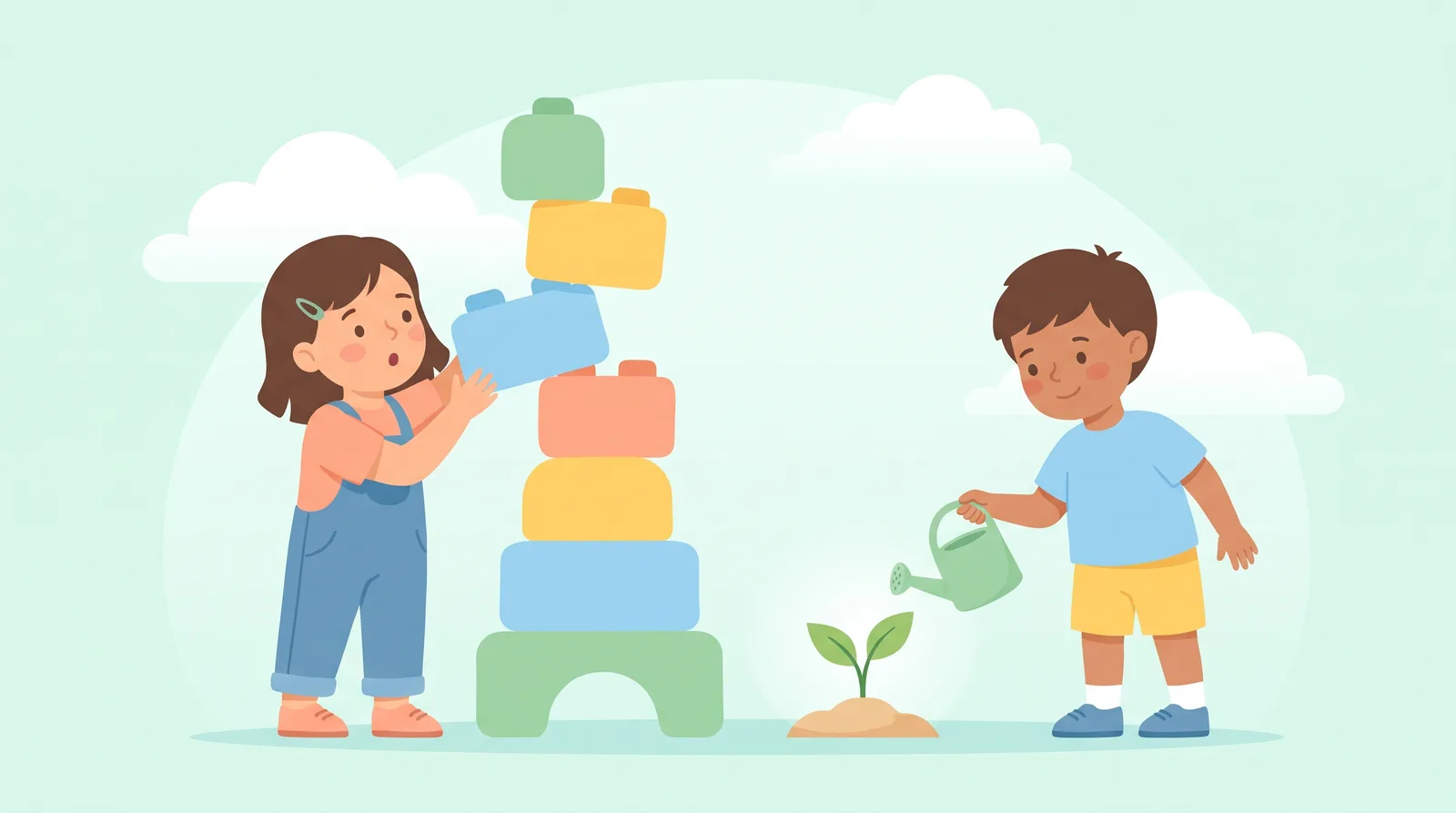
Many parents worry about supporting their child's growth during the preschool years. Children's brains develop rapidly in the first five years. This post shares ways to boost cognitive, social, and emotional skills through play and activities.
Make these years count.
Key Takeaways
Brain Development
90% of the brain grows by age five. Preschool helps this growth with fun activities.
Learning Through Play
Games and puzzles make kids think creatively and solve problems.
Reading Together
Reading builds language skills and helps children love books.
Social Skills
Playing with friends and following routines improve communication and confidence.
Physical Activities
Arts, music, and outdoor play keep kids healthy and strong.
How Can Play Enhance Your Child's Cognitive Skills?
With 90% of brain growth happening by age five, the preschool years represent an extraordinary window for cognitive growth. Play-based learning isn't just fun — it's the primary mechanism through which young children build neural pathways for critical thinking, problem-solving, and memory. The American Academy of Pediatricscalls play "essential to development because it contributes to the cognitive, physical, social, and emotional well-being of children."
Research from the National Institute for Early Education Research (NIEER)shows that children in high-quality play-based preschool programs score significantly higher on kindergarten readiness assessments than peers without preschool experience. The key is "guided play" — activities where adults set up learning environments and ask questions that extend children's thinking, while still allowing children to lead the exploration.
Effective cognitive activities for preschoolers include puzzles and sorting games (which build classification and pattern recognition), building with blocks (spatial reasoning and early math), and reading together daily (vocabulary, comprehension, and narrative thinking). Simple science experiments like mixing colors or observing plants grow teach children to hypothesize and observe — foundational scientific thinking skills.
The Countdown2K appincorporates these research-backed approaches into 13 interactive games that adapt to each child's level, making it easy for families to weave cognitive development into everyday moments.
What Strategies Support Social and Emotional Growth?
Social-emotional development during the preschool years lays the groundwork for everything from classroom behavior to lifelong relationship skills. A long-running study published in the American Journal of Public Healthfound that kindergarten teachers' ratings of children's social competence predicted education, employment, and mental-health outcomes nearly two decades later — even after accounting for family background and other child characteristics. In other words, how well a child manages emotions and gets along with peers matters as much as how well they count or recognize letters.
Routines are one of the most powerful tools parents have. Predictable daily schedules give children a sense of security and help them practice transitions — a skill they'll need dozens of times each day in kindergarten. Encourage peer interactions through playdates and group activities, and use open-ended questions ("How did that make you feel?" or "What could you do differently next time?") to build emotional vocabulary and self-reflection.
"Emotional support builds the foundation for a confident child."
Imaginative play is especially powerful for developing empathy — when children pretend to be a doctor, a teacher, or a parent, they practice perspective-taking and emotional regulation. Group games teach cooperation, turn-taking, and graceful losing. For more strategies and activities, explore our guide to supporting social-emotional development.
What Physical Activities Support Preschool Development?
Physical activities support a preschooler's growth and health. They build strong muscles and coordination.
Arts and Crafts
Cutting, gluing, and drawing enhance fine motor skills and build the hand strength needed for writing in kindergarten.
Music and Movement
Dancing and playing instruments boost physical coordination while also developing rhythm, memory, and listening skills.
Simple Science Experiments
Activities like pouring and mixing develop hand-eye coordination. These experiments make learning fun.
Outdoor Play
Running, jumping, and climbing strengthen muscles. Include playground time in your daily routine.
Limit Screen Time
Use age-appropriate educational content to support physical breaks. Balance screen time with active play.
Physical Skill Games
Games like tag and hopscotch improve agility, balance, and body awareness while teaching children to follow rules.
Yoga and Stretching
Simple poses increase flexibility, balance, and body awareness while teaching children to focus and calm themselves.
Sports Activities
Introduce basic sports like kicking a ball or tossing beanbags to develop teamwork, coordination, and gross motor skills.
Next, explore strategies for social and emotional growth.
Conclusion: Maximizing Preschool Potential
The preschool years represent an irreplaceable developmental window. Every puzzle completed, every book read together, every playground visit, and every conversation at the dinner table contributes to the cognitive, social, emotional, and physical skills your child needs for kindergarten success. The research is clear: intentional, consistent engagement during these years produces measurable, lasting benefits.
You don't need to be a trained educator to make these years count. Start with 15-20 minutes of focused learning activities daily — reading, counting, sorting, drawing — and build from there. The Countdown2K app can help you structure these activities with age-appropriate games that grow with your child. For a complete picture of the skills your child should be developing, download our Kindergarten Readiness Checklist.
To understand the specific developmental factors that predict kindergarten success, read our deep dive on understanding kindergarten readiness factors.
FAQs
1. How can parents enhance their child's learning in preschool?
Parents can enhance their child's learning by engaging in activities that promote curiosity, reading together, and providing a supportive environment. Use teaching experience to choose games and tasks that build essential skills.
2. What role does teaching experience play in preschool education?
Teaching experience helps educators create effective lesson plans, understand each child's needs, and foster a positive learning atmosphere. Experienced teachers can better prepare children for becoming school-aged children.
3. What activities are best for preparing children for school-aged years?
Activities like puzzles, storytelling, and interactive play support a child's learning. These tasks develop social skills and cognitive abilities, making the transition to school-aged children smoother.
4. When should parents focus on transitioning their child from preschool to school-aged programs?
Parents should start the transition by observing their child's readiness, such as attention span and social interactions. Using teaching experience, they can select programs that align with their child's learning stage.